 EN
How to Assess Production Efficiency at a PP Woven Bag Factory
Discover the 4 critical production metrics—throughput, defect rate, equipment uptime & on-time delivery—to vet factories confidently.

2026/09/03
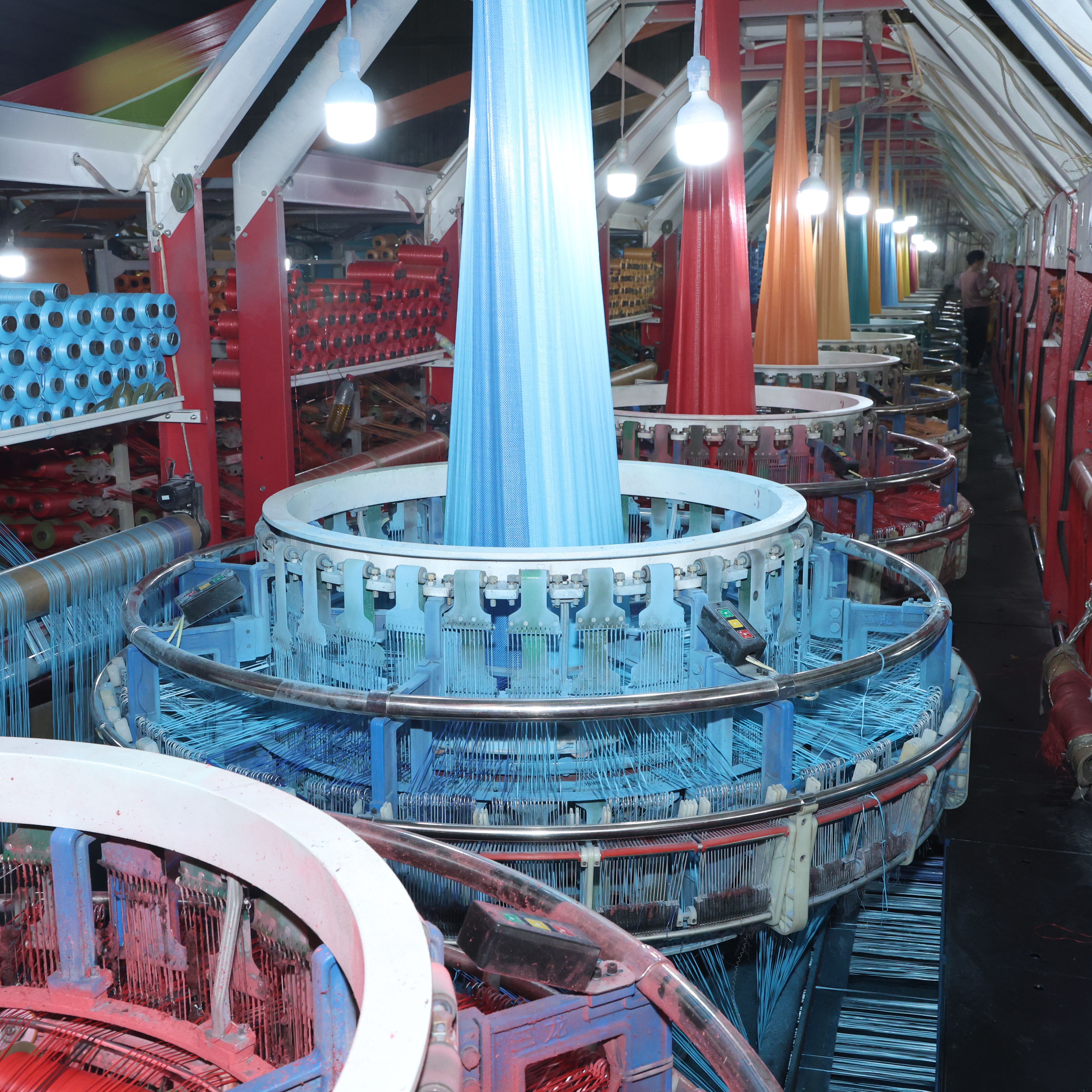
Output consistency remains one of the most critical challenges in modern industrial manufacturing, particularly within the PP woven bag industry. When a PP woven bag factory operates across multiple shifts, managers and production supervisors frequently observe noticeable variations in daily output quantities and quality metrics. These fluctuations directly impact profitability, customer satisfaction, and operational efficiency. Understanding the root causes behind these inconsistencies is essential for any facility aiming to maintain competitive advantage in the demanding polypropylene packaging sector.
A PP woven bag factory typically runs production across day, evening, and night shifts, each managed by separate teams with varying experience levels, supervision intensity, and environmental conditions. The reality of shift-based operations means that equipment performance, workforce attention, material quality, and maintenance schedules rarely remain constant throughout a 24-hour cycle. This article explores the major factors that create output variance and provides actionable strategies to achieve more uniform production performance across all shifts.
Equipment behavior shifts significantly depending on when maintenance occurs and how well technicians monitor machinery health. In a woven bag production line, looms and extrusion systems require precise calibration and regular upkeep to maintain consistent output rates. Many facilities schedule routine maintenance during daytime hours, meaning evening and night shifts operate with equipment that has accumulated wear since the previous morning service window. Thermal expansion of machinery, accumulated dust in critical components, and gradual wear on moving parts all contribute to reduced output during later shifts.
Preventive maintenance protocols must address this timing mismatch. Some of the most successful facilities implement staggered maintenance schedules that include brief equipment checks and minor adjustments during shift transitions. Additionally, predictive maintenance technologies such as vibration sensors and temperature monitoring can alert operators to problems before they impact production volume. A pp bag manufacturing operation that tracks machine performance metrics throughout each shift gains early warning signals for degradation patterns.
Human factors play a dominant role in output consistency across shifts. Experienced operators on the day shift often represent the facility's most skilled personnel, while evening and night shifts may include newer team members still developing proficiency. This skill differential directly affects how quickly operators respond to equipment anomalies, adjust production parameters, and troubleshoot disruptions. Supervision intensity also varies; day shift supervisors typically maintain closer oversight, while night shift management may cover larger areas or respond to multiple facilities simultaneously.
Training and cross-functional knowledge sharing become critical levers for consistency improvement. Facilities that implement formal operator certification programs and rotate experienced staff across all shifts see measurable output normalization. Documentation of best practices, machine settings, and troubleshooting procedures allows newer operators to match established performance benchmarks more quickly.
The quality and properties of polypropylene feedstock directly influence how a custom woven bag factory processes materials and achieves target specifications. Raw material suppliers sometimes deliver batch variations, moisture content differences, or density fluctuations that are difficult to detect without proper laboratory analysis. If the day shift receives material from one supplier batch and the night shift processes a different batch, the production line may require parameter adjustments to maintain dimensional accuracy and tensile strength.
Material testing protocols should occur at shift handover points, not just during incoming inspection. This practice ensures operators understand the specific characteristics of the feedstock they will process. Advanced bulk bag manufacturing operations maintain detailed material traceability records and adjust extrusion temperatures, pressure settings, and line speeds based on documented material properties. When operators work with consistent information about their raw materials, output variance decreases substantially.
Storage conditions significantly impact material behavior on the production line. Polypropylene exposed to temperature fluctuations or humidity variation may develop moisture absorption that affects melt flow during extrusion. Night shifts, particularly during cooler weather, may receive materials stored in uncontrolled warehouse areas with temperature drops. This environmental variance creates processing differences that are not related to operator performance or equipment condition but directly influence final output metrics.
Environmental control in material storage areas and pre-production staging zones represents a practical investment with measurable returns. Maintaining consistent temperature ranges between 20 and 25 degrees Celsius and controlling humidity below 60 percent stabilizes material properties across all shifts. Material conditioning periods before production, where feedstock acclimate to shop-floor conditions, further reduce shift-to-shift variability in the woven bag production line.
Factory environmental conditions vary significantly between shifts due to HVAC operation, external weather patterns, and equipment heat generation. A PP woven bag factory operating in a climate with significant day-night temperature swings faces inherent challenges in maintaining consistent production parameters. Extruders and looms operate at specific temperature ranges; when ambient temperature drops during night shifts, equipment may require additional warm-up time and parameter adjustments to reach optimal performance states.
Environmental monitoring systems that track temperature, humidity, and air quality provide operators with real-time context for production decisions. Facilities with dedicated HVAC zones for production areas typically see more consistent output across shifts. Insulation of equipment, pre-heating of materials before processing, and active climate control become cost-effective measures when output consistency directly influences profitability.
Shift priorities and job scheduling create additional variables affecting output metrics. Day shifts often process higher-priority customer orders with strict deadline requirements, which may drive higher line speeds and focused output targets. Evening and night shifts may handle lower-priority work, new product trials, or maintenance-heavy schedules that naturally produce lower standard output volumes. These differences represent scheduling policy impacts rather than true equipment or workforce limitations.
Standardizing output targets across shifts while accounting for legitimate scheduling differences provides clarity to operators and supervisors. A bulk bag manufacturing facility that communicates consistent production goals, clearly differentiates between standard production runs and specialty jobs, and tracks metrics using standardized measurement methods enables fair comparison between shifts and identifies genuine performance gaps versus scheduling-driven variations.
Key metrics include units produced per shift, percentage of on-spec output, downtime duration and cause, changeover times between jobs, and defect rates. Advanced facilities also monitor equipment utilization rates, raw material consumption per unit produced, and operator-level efficiency indicators. Tracking these metrics by shift and shift operator reveals patterns that point to specific root causes, whether equipment-related, procedural, or environmental. When a woven bag production line establishes baseline metrics during optimal performance periods, deviations become immediately visible and actionable.
Operational improvements often deliver substantial results before capital spending becomes necessary. Implementing thorough shift handover procedures where supervisors document equipment status, pending issues, and material characteristics takes minimal time but significantly improves consistency. Cross-training operators to work on multiple production lines increases flexibility during unexpected absences and spreads expertise across shifts. Establishing standardized operating procedures with documented machine settings for each product type reduces decision-making variance. Regular communication meetings between shift teams create knowledge transfer opportunities and build institutional understanding of what drives successful production runs.
Night shifts commonly experience lower output due to reduced supervision availability, cooler ambient temperatures requiring equipment adjustment time, less experienced operator availability, deferred maintenance accumulation from earlier shifts, and reduced material staging coordination. Additionally, material deliveries often occur during business hours, meaning night shift operators may work with less-optimized feedstock characteristics or incomplete material information. Many facilities observe that the second night shift shows the lowest output as fatigue increases and accumulated equipment degradation from the previous 24 hours peaks. Addressing these factors requires deliberate scheduling and support structures rather than assuming night shift operators have lower capability.

Discover the 4 critical production metrics—throughput, defect rate, equipment uptime & on-time delivery—to vet factories confidently.

Ensure regulatory compliance & worker safety with proven methods for chemical woven bags—material selection, labeling, storage & training.

Discover the full PP woven bag manufacturing workflow—from extrusion & weaving to printing & QC. Boost efficiency, compliance & ROI. Download the process guide now.

Struggling with weak bags or high material waste? Master extrusion and tape drawing tech for stronger, cheaper PP woven bags. Optimize your production line now.

Struggling with defects or customer returns? Discover the 5 non-negotiable quality checkpoints across your woven bag production line
Which automation tier is right for your PP woven bag factory? Compare manual to Industry 4.0 systems for cost, quality, and scalability.
Get in touch for details on polypropylene woven bags and flexible packaging solutions.
Tel
Address
No.2015, Liaoyuan Building, Lanshan District, Linyi City, Shandong Province.China

