 EN
How to Assess Production Efficiency at a PP Woven Bag Factory
Discover the 4 critical production metrics—throughput, defect rate, equipment uptime & on-time delivery—to vet factories confidently.

2026/08/04

Modern manufacturing demands efficiency, precision, and scalability. A PP woven bag factory today operates across a spectrum of automation levels, each designed to meet specific production demands and market conditions. Understanding these automation tiers is essential for businesses selecting packaging solutions, evaluating supplier capabilities, and planning investments in manufacturing infrastructure. The evolution from manual processes to fully integrated automated systems represents a fundamental shift in how polypropylene woven bags are produced at scale.
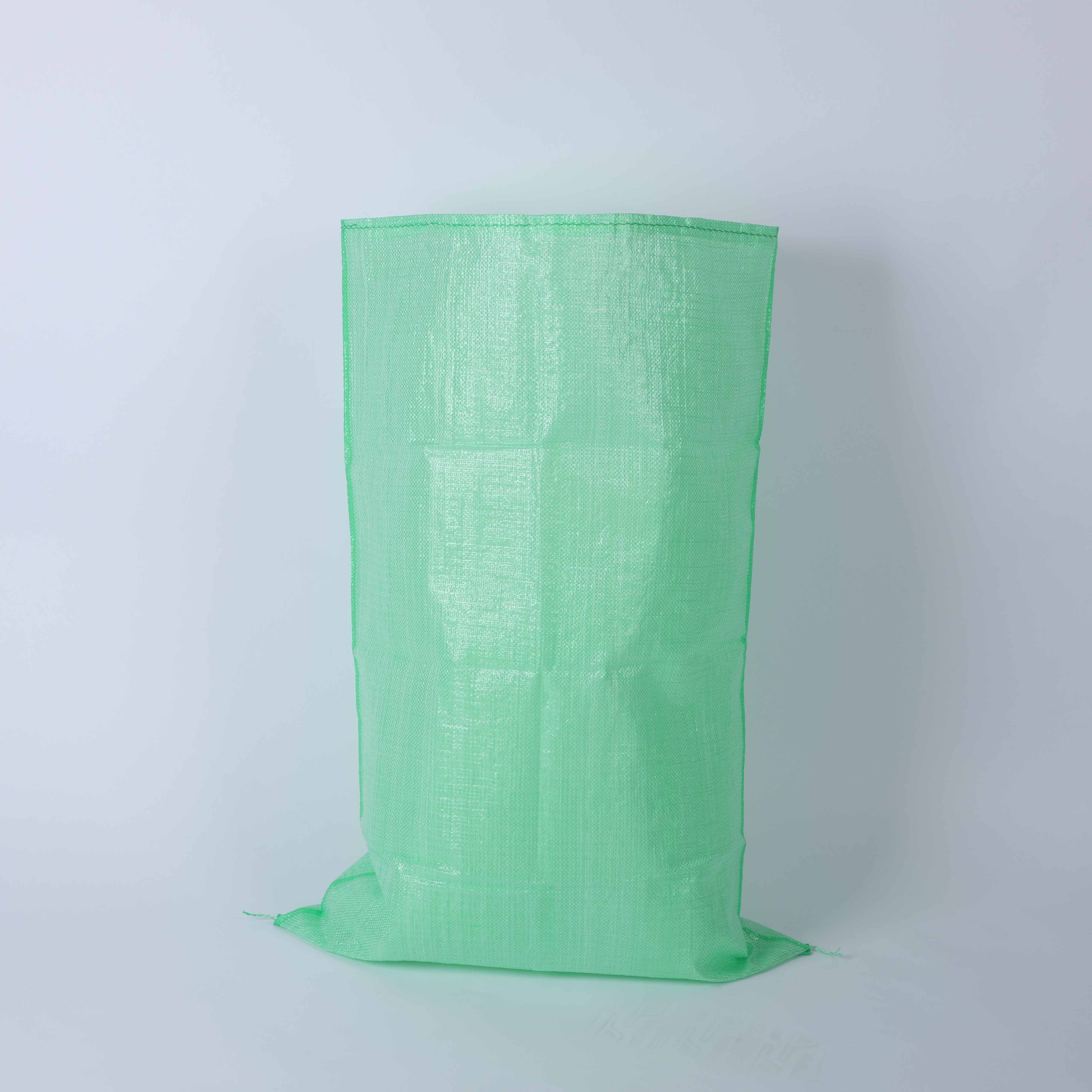
The automation landscape in woven bag production line environments reflects decades of industrial refinement and technological advancement. Facilities range from semi-automated operations handling specialized custom woven bag factory orders to fully mechanized bulk bag manufacturing centers that process millions of units annually. Each automation level presents distinct advantages in speed, cost, quality consistency, and flexibility, making the choice of automation architecture a critical business decision for manufacturers and their customers.
Semi-automated pp bag manufacturing represents the baseline for many mid-sized operations. Operators oversee raw material feeding, weaving direction control, and cutting operations while machines handle repetitive mechanical functions. This approach reduces labor intensity but maintains flexibility for custom woven bag factory work, allowing quick changeovers between different bag specifications, colors, and sizes. Semi-automated systems typically involve manual material handling between production stages, operator-driven quality checks, and mechanical loom systems that require oversight.
These foundational systems work particularly well in facilities producing specialty bags or limited-batch runs where setup costs for full automation would outweigh efficiency gains. A custom woven bag factory handling diverse customer requirements often benefits from semi-automated lines that balance productivity with adaptability. Operators develop expertise in recognizing production anomalies, adjusting tension settings, and managing quality across varying material specifications.
Early mechanization integrates pneumatic and hydraulic systems into the woven bag production line, automating specific bottleneck processes. Material feeding becomes mechanized, winding systems operate independently, and cutting operations execute programmed sequences. These improvements reduce manual intervention and improve consistency in pp bag manufacturing cycles. Early-stage mechanized facilities still require operators for material setup, quality monitoring, and line changeovers, but production throughput increases significantly compared to purely manual methods.
Modern bulk bag manufacturing facilities increasingly adopt Programmable Logic Controller (PLC) technology that coordinates multiple production stages simultaneously. These systems automate material tensioning, loom speed adjustment, cutting synchronization, and waste collection without requiring operator adjustment during production runs. A PP woven bag factory implementing PLC systems achieves substantial productivity improvements, reducing cycle times and minimizing human error in repetitive sequences. Operators transition from hands-on control to system monitoring and troubleshooting roles.
PLC-integrated woven bag production line systems store production parameters for different bag specifications, enabling rapid changeovers by simply calling up preset configurations. Quality metrics like bag weight consistency, thread tension uniformity, and seam strength become monitored automatically through sensors integrated into the production flow. This level of automation suits high-volume standard production while maintaining enough flexibility for occasional custom woven bag factory orders with quick setup protocols.
Advanced mid-level systems incorporate sensors throughout the pp bag manufacturing process, collecting data on production speed, material usage, defect rates, and equipment performance. This real-time visibility enables operators to detect quality deviations before they affect large batches and supports predictive maintenance by identifying equipment degradation patterns. Data-driven feedback helps bulk bag manufacturing facilities optimize settings across multiple production lines simultaneously, improving consistency across the entire facility.
A PP woven bag factory operating at the highest automation level integrates artificial intelligence and machine vision into the woven bag production line architecture. Computer vision systems inspect finished bags for defects, measure dimensions to micron tolerances, and sort products automatically. Artificial intelligence algorithms optimize production parameters in real time based on material properties, environmental conditions, and historical performance data. These systems dramatically reduce defect rates and maximize material efficiency, which directly improves profitability in bulk bag manufacturing operations.
Advanced facilities employ robotic handling systems that move materials between production stages, load raw materials into the pp bag manufacturing process, and pack finished products into shipping containers. Human workers become system programmers, maintenance technicians, and quality supervisors rather than production line operators. A custom woven bag factory at this level can execute rapid customization by adjusting digital specifications and AI parameters without requiring physical line reconfiguration.
The most sophisticated woven bag production line systems connect to broader manufacturing ecosystems that link inventory management, customer order systems, and logistics platforms. A PP woven bag factory operating within such an ecosystem automatically adjusts production schedules based on real-time demand signals, optimizes material procurement, and coordinates shipments without manual intervention. Cloud-based systems provide remote monitoring capabilities, allowing supply chain partners to track bulk bag manufacturing progress in real time and adjust downstream operations accordingly.
Capital investment requirements increase exponentially as facilities move toward advanced automation, ranging from modest investments for semi-automated systems to multi-million dollar implementations for Industry 4.0 ecosystems. However, operational cost reductions compound over time as labor requirements decrease and material waste diminishes. A PP woven bag factory must evaluate expected production volume, product mix complexity, and market pricing power when selecting automation levels. Custom woven bag factory operations typically remain at lower automation tiers due to high changeover costs, while bulk bag manufacturing with standardized products justifies advanced systems.
Advanced automation in pp bag manufacturing delivers measurable quality improvements including tighter dimensional tolerances, reduced contamination risks, and consistent bag strength specifications. Automated systems generate comprehensive audit trails and traceability documentation that satisfy regulatory requirements across food, chemical, and agricultural industries. A woven bag production line with integrated quality systems provides customers with data-driven confidence in product consistency, supporting premium pricing and long-term contract security.
Mid-sized facilities typically operate most efficiently at the mid-level automation tier incorporating PLC systems, real-time monitoring, and sensor integration. This approach balances capital investment against operational efficiency, supporting production volumes between 500 to 5000 tons annually while maintaining flexibility for product variations and quick market adaptations. Many PP woven bag factory operators find this sweet spot delivers strong returns on capital while avoiding over-investment in systems that exceed operational needs.
Custom woven bag factory operations benefit primarily from semi-automated and mid-level automation systems that allow rapid changeovers without extensive downtime or setup costs. Advanced automation introduces significant changeover complexity, making it less suitable for high-variety, low-volume customer orders. However, semi-automated woven bag production line systems with digital controls enable fast reconfiguration for different bag specifications while maintaining quality standards that justify premium pricing for custom products.
Bulk bag manufacturing operations typically drive investment in advanced automation because high production volumes justify capital expenditure and enable rapid payback periods. The standardized nature of bulk products eliminates costly changeovers, allowing facilities to run production lines continuously for extended periods. A PP woven bag factory specializing in bulk bag manufacturing can operate most of the day on fully automated systems, dramatically improving asset utilization and profitability compared to semi-automated alternatives.

Discover the 4 critical production metrics—throughput, defect rate, equipment uptime & on-time delivery—to vet factories confidently.

Ensure regulatory compliance & worker safety with proven methods for chemical woven bags—material selection, labeling, storage & training.
Discover the full PP woven bag manufacturing workflow—from extrusion & weaving to printing & QC. Boost efficiency, compliance & ROI. Download the process guide now.

Struggling with weak bags or high material waste? Master extrusion and tape drawing tech for stronger, cheaper PP woven bags. Optimize your production line now.

Struggling with defects or customer returns? Discover the 5 non-negotiable quality checkpoints across your woven bag production line
Get in touch for details on polypropylene woven bags and flexible packaging solutions.
Tel
Address
No.2015, Liaoyuan Building, Lanshan District, Linyi City, Shandong Province.China

